Posts

One match standing out among many, representing leadership success versus failure in small manufacturers

Why Do Some Leaders Fail in Small Manufacturers While Others Thrive?

Leadership in a small manufacturing environment is a different test than leadership in a large, structured company. The pace is faster, the support is thinner, and the expectations land directly on the person running the shop. Some leaders thrive under those conditions. Others struggle. These differences explain why. 1. Strong leaders adapt quickly. Weak leaders…
Read more

Reviewing a candidate’s documented results and notes to verify real leadership achievements

How Do You Verify Whether a Leadership Candidate Has Real Results?

Leadership candidates often talk about results, but not all results are created equal. Some leaders drive measurable improvements. Others take credit for work done by the team or the system around them. Verifying real results helps you understand whether a candidate actually created outcomes or simply watched them happen. 1. Ask for numbers, not generalities…
Read more

Manufacturing supervisor and manager reviewing work instructions together on the production floor

When Should a Small Manufacturer Hire a Supervisor vs a Manager?

Small manufacturers often struggle with deciding whether a growing operation needs a supervisor or a manager. Both roles are important, but they serve different purposes and solve different problems. Choosing the right level of leadership helps you avoid wasted payroll, misaligned expectations, and gaps in accountability. Here are the signals that help you decide which…
Read more

Team collaborating around a table, representing leadership driving change through planning and shared ownership

How Can You Tell if a Leadership Candidate Can Drive Change?

Driving change in a small manufacturing operation takes more than confidence or a list of past accomplishments. It requires a leader who understands people, can read the room, and knows how to move an operation forward without overwhelming the team. These signals help you see whether a candidate can drive meaningful change instead of just…
Read more

Manufacturing leaders and managers discussing work together on the production floor, illustrating the difference between managing and leading.

What’s the Difference Between Managing and Leading in Manufacturing?

In smaller manufacturing environments, the line between managing and leading is easy to blur. Both roles matter, but they create very different results. Managing keeps the operation moving. Leading makes the operation better. Understanding the difference helps you hire people who can lift your team instead of just maintaining it. 1. Managers focus on tasks.…
Read more

Leadership team discussing work together inside a small manufacturing facility, reflecting cultural fit and communication style

How Do You Know If a Leader Is a Good Fit for Your Culture?

Leadership fit is one of the strongest predictors of success in a small manufacturing environment. Skills matter, but the way a leader communicates, makes decisions, and works with people determines whether the team follows them or resists them. Culture is not about buzzwords. It is about daily behavior. These signals help you understand whether a…
Read more

Stacks of money representing the financial impact of a leadership mis-hire in a small manufacturing

How Much Does a Leadership Mis-Hire Really Cost a Small Manufacturer?

The short answer? A LOT. Estimates start at twice the annual salary and go up significantly from there based on the scope of their responsibilities. A bad leadership hire hits small manufacturers harder than almost any other mistake. When the person running the operation struggles, the impact ripples through production, quality, morale, and even the…
Read more

Human tower symbolizing how strong leadership builds trust and enables teams to support one another

How Do You Evaluate a Leader’s Ability to Build a Team?

Building a team is the heart of leadership in a small manufacturing environment. Processes matter, but people carry the operation. A strong leader knows how to lift capability, build trust, and get everyone moving in the same direction. Here are the signals that show whether a candidate can actually build a strong team, not just…
Read more

Plant operations leaders discussing work together on the production floor

Six Key Traits Common In Strong Plant or Operations Leaders

A strong plant or operations leader does far more than manage schedules and walk the floor. In a small or mid sized manufacturing environment, their impact is felt in every corner of the operation. They set direction, solve problems, build trust, and keep the entire facility moving in the same direction. Understanding what great leadership…
Read more

A large industrial facility, illustrating the contrast between big-company environments and small manufacturing shops when hiring leaders

Should You Hire a Leader From a Big Company Into a Small Shop?

Hiring leaders out of large companies sounds appealing. They often have strong tools, polished processes, and impressive titles. But success in a big, structured environment does not always translate to a small or mid sized manufacturer. The pace, support levels, and daily expectations are completely different. Here are the factors to consider before bringing someone…
Read more

Person sitting alone under red flags, symbolizing warning signs to watch for in leadership interviews

How Can You Spot Red Flags in Leadership Interviews?

Some leadership candidates interview well but fall apart once they’re in the role. Smaller manufacturers feel that pain fast. The best way to avoid a costly mis-hire is to watch for signals that their leadership style, decision habits, or behavior won’t hold up in a lean, fast-moving operation. These red flags show up early if…
Read more

Interview conversation with notes and questions, illustrating what to ask an operations leader

What Questions Should You Ask When Interviewing an Operations Leader?

Interviewing an operations leader takes more than asking about experience or past responsibilities. Smaller manufacturers need leaders who think clearly, communicate well, handle pressure, and drive progress even when resources are limited. These questions help you understand how a candidate actually leads, not just how they talk about leadership. 1. “Walk me through a time…
Read more

Team gathered on a manufacturing floor in protective gear, illustrating what successful leadership looks like in a small manufacturing environment

What Makes a Leader Successful in a Small Manufacturing Environment?

Most leadership advice is written for large companies with layers of support. Smaller manufacturers live in a different world. Fewer people. Faster changes. More pressure on the person in charge. The leaders who succeed here share very specific traits, and knowing what to look for will help you make a better hire. 1. They create…
Read more

Manufacturing engineer troubleshooting equipment on the shop floor to solve a production problem

The Fastest Way to Identify Engineers Who Can Solve Real Problems

Some engineers talk well. Some solve well. The difference shows up fast when the right questions get asked. Problem solvers think in outcomes, decisions, constraints, and impact. Talkers think in tasks, tools, and buzzwords. Here are the signals that separate the two. 1. Problem solvers describe the problem before the solution When asked about a…
Read more

Engineer performing hands-on work with manufacturing equipment in a small production environment

Red/Green Flags to Tell If an Engineer Can Deliver Without Big-Company Resources

Small manufacturers need engineers who can solve problems without layers of support teams, detailed documentation, or established systems. Many candidates come from larger organizations where success is easier because structure and resources absorb the toughest parts of the work. Below you’ll find some common red/green flags to keep an eye out for during interviews. Red…
Read more

Engineers collaborating on equipment setup in a manufacturing environment

Why Skills Don’t Always Predict Engineering Performance

Most engineering job descriptions focus on long lists of skills. CAD platforms, programming languages, certifications, software experience, equipment exposure, preferred backgrounds, and bonus competencies. These lists look thorough, but they rarely predict whether an engineer can actually solve the problems inside a small manufacturing environment. Skills show what someone has learned. Performance shows what someone…
Read more

Hiring discussion representing competition for limited engineering talent in a tight labor market

How Tight Labor Pools Impact Small Manufacturers

Engineering talent has always been competitive, but tight labor pools amplify the challenge for small manufacturers. When fewer qualified engineers are available, every part of the hiring process feels heavier. The applicants coming in represent only a slice of the total talent market, and most of the best people are already working, not job seeking.…
Read more

Illustration representing engineers disengaging from a hiring process focused only on résumés

Why Engineers Ghost and How to Stop It

Engineer ghosting feels unpredictable, but in most cases it follows a clear pattern. Small manufacturers often assume candidates are unreliable or flaky, when the real problem is usually the hiring experience itself. Engineers ghost when the process feels unclear, slow, disorganized, or risky. They ghost when they lose confidence in the opportunity or feel unsure…
Read more

Engineers collaborating hands-on to solve a practical design and build problem

What SMB Manufacturers Overlook When Hiring Engineers

What SMB Manufacturers Overlook When Hiring Engineers Most small manufacturers rely on job descriptions that read like shopping lists: CAD proficiency, degree requirements, years of experience, preferred software, bonuses for certifications. On paper it feels thorough. In practice, it doesn’t tell you whether an engineer can actually use those skills to accomplish the work your…
Read more

Illustration representing evaluating engineering roles by the work required rather than the candidate profile

How To Write Better Engineering Job Descriptions

Hiring engineers in a lean manufacturing environment is hard enough. A weak job description makes it almost impossible. Most job ads are long checklists, vague responsibilities, and inflated wish lists that push the right candidates away while encouraging the wrong ones to apply. A better job description does not start with a list of skills.It…
Read more

How To Handle The Squeeze From Tariffs, Inflation, and Pay Raises

If you’re running a manufacturing business you’re probably feeling the financial squeeze from both sides. On one hand, prior inflation and upcoming tariffs can drive up the costs of materials and equipment. On the other, your employees are still feeling the pinch from inflation and expecting higher wages. It’s a tough spot to be in. You…
Read more

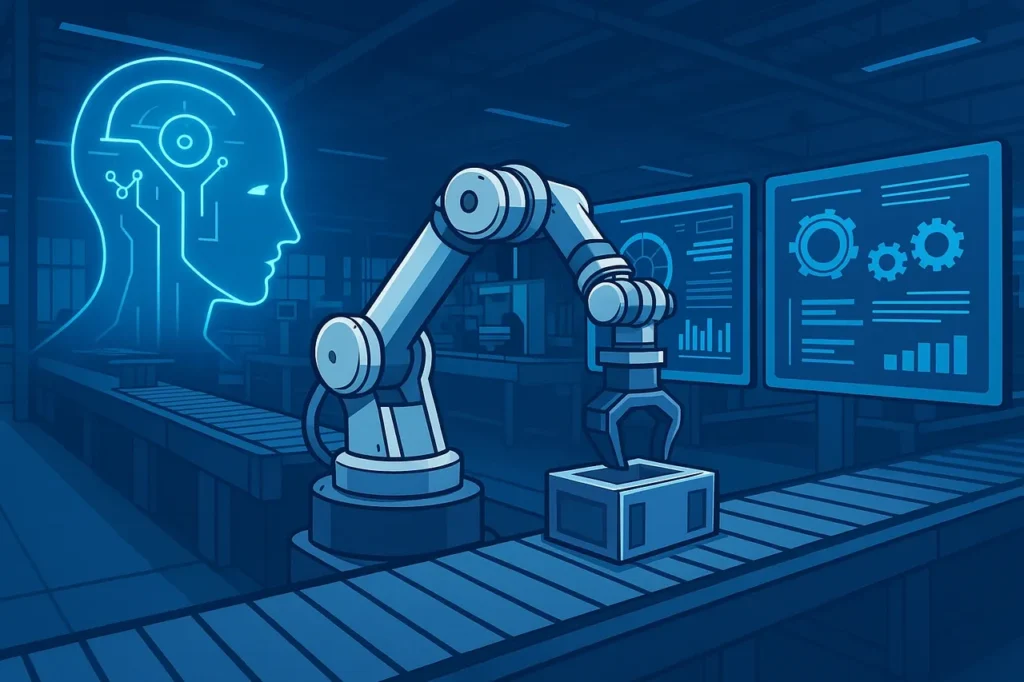
When AI Gets a Body: What Physical AI Means for Manufacturing

With the constant articles on it, you’re probably getting tired of hearing about AI but it’s quickly becoming an important daily tool. Most of us have used it for document writing, creating menus, or created images. Now imagine it with arms, cameras, and a wrench. That’s essentially what’s happening in modern manufacturing. “Physical AI agents”…
Read more